Resource-Based View of Strategy, A Structured Research Review
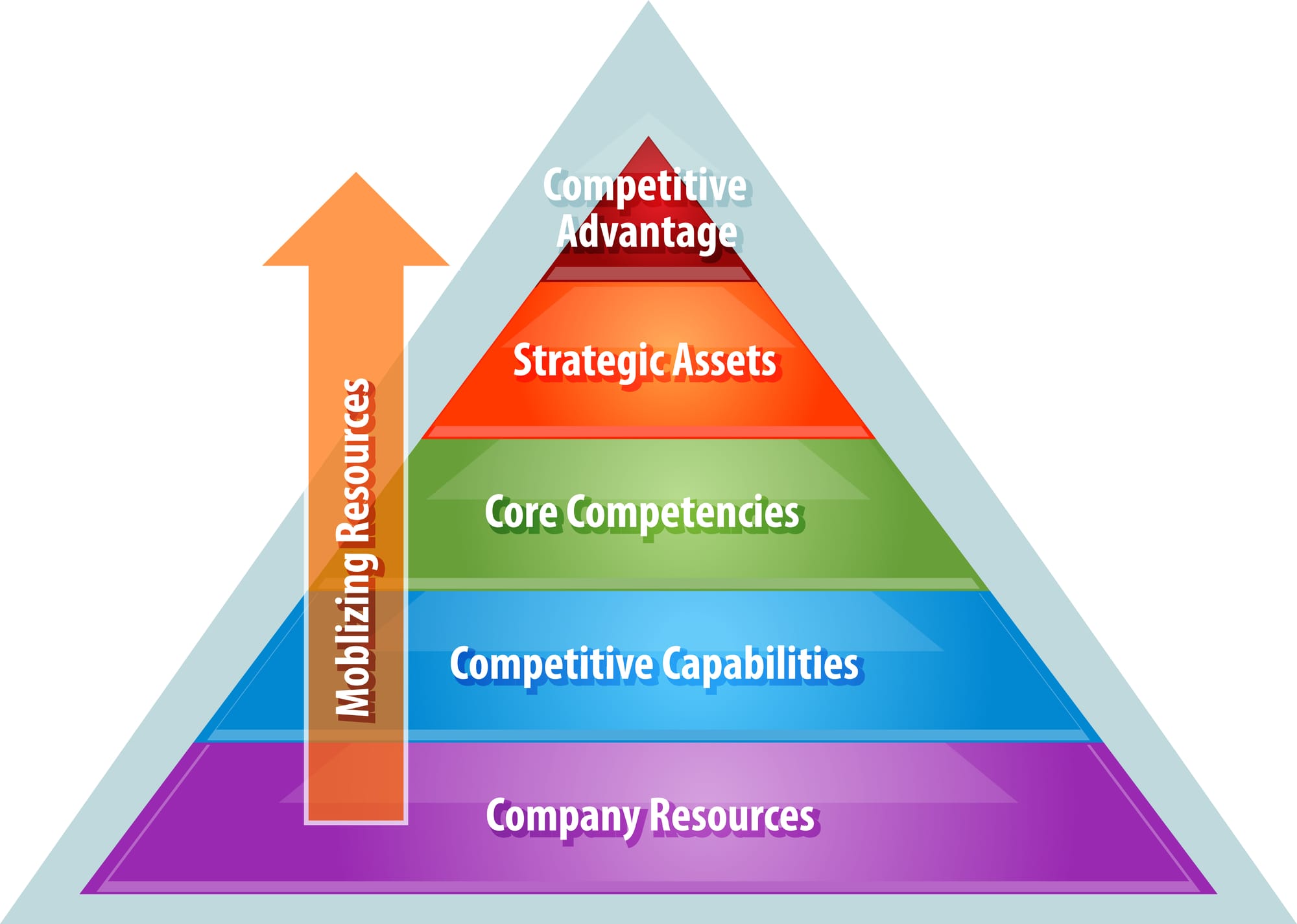
Business Consulting Solutions, Resource-Based View of Strategy, A Structured Research Review
Introduction
The Resource-Based View of strategy, commonly abbreviated as RBV, is a dominant theoretical lens in strategic management for explaining why some firms achieve sustained competitive advantage while others do not. Rather than focusing primarily on industry structure or positioning, RBV argues that firm level heterogeneity in resources and capabilities is the central driver of performance differences. In its most cited formulations, resources that are valuable, rare, imperfectly imitable, and non substitutable, or that are organized to capture value, enable superior outcomes. For business leaders and consultants, RBV provides a disciplined way to assess internal strengths, to prioritize capability building, and to justify investment in assets that competitors cannot easily replicate.
This article presents a structured research review of the Resource-Based View of strategy. The aim is not to advocate RBV uncritically, but to synthesize what the research has found about its core claims, how scholars have tested it, what consistent results have emerged, and where limitations remain. The review is written in an academic style, with explicit methodology, results, and discussion sections, to support evidence oriented strategic decision making for readers of Business Consulting Solutions.
Background and conceptual framing
RBV developed from earlier work on firm growth and resource heterogeneity and was formalized in influential contributions that argued firms possess bundles of resources that differ across organizations and persist over time. These resources can include tangible assets like specialized equipment, intangible assets like brand reputation and patents, and organizational capabilities like routines, systems, and culture. A related stream translated the logic into evaluative criteria, such as VRIN and later VRIO, that provide a checklist for diagnosing whether a resource can be a source of advantage and whether the firm can appropriate the value created.
RBV research spans multiple levels of analysis, from business units to corporate groups and interorganizational networks, and overlaps with adjacent perspectives such as dynamic capabilities, knowledge based theory, and relational views of advantage. This overlap is important for a research review because many empirical studies test RBV claims indirectly, using proxies for resources or capabilities, or combining RBV with environmental and competitive factors.
Methodology
Review design
This review follows a structured narrative approach. The goal is to summarize the state of evidence while making the selection and synthesis process explicit. Because RBV is a mature literature with thousands of publications, a fully exhaustive systematic review is beyond the scope of a single article. Instead, the methodology emphasizes transparency in search, screening, and coding, and prioritizes high impact conceptual works and empirical studies that directly test RBV mechanisms.
Search strategy
Search terms were constructed around core RBV concepts and common operationalizations. Example queries included: “resource based view” AND “competitive advantage”, “VRIO” AND “performance”, “firm resources” AND “imitation” AND “sustained”, “intangible resources” AND “performance”, “capabilities” AND “path dependence”, and “dynamic capabilities” AND “resource based view”. Searches were targeted to peer reviewed journal articles, review papers, and frequently cited foundational works in strategic management, organization science, and entrepreneurship. Practitioner oriented sources were used selectively to identify how academic constructs were translated into consulting tools, but conclusions in the results section are based primarily on peer reviewed research.
Inclusion and exclusion criteria
Studies were included if they met at least one of the following criteria: they explicitly stated RBV as a theoretical foundation, they tested hypotheses derived from RBV logic about resource attributes and performance, or they measured firm specific capabilities and related them to competitive outcomes while addressing mechanisms like imitation barriers or isolating mechanisms. Studies were excluded if they only used RBV as background rhetoric without operationalization, or if performance outcomes were not connected to resource heterogeneity or value capture. Conceptual papers were included when they refined RBV constructs, addressed boundary conditions, or proposed integrative frameworks.
Data extraction and coding
For each included paper, the following elements were coded: unit of analysis, resource type (tangible, intangible, human, organizational, relational), measurement approach (survey scales, archival proxies, patent or brand metrics, case based assessments), performance outcomes (accounting returns, market valuation, growth, innovation), empirical design (cross sectional, longitudinal, quasi experimental, qualitative), and the causal mechanism emphasized (value creation, rarity, inimitability, organization, appropriability). Particular attention was paid to how studies handled endogeneity and reverse causality, such as whether high performance could itself enable resource accumulation.
Synthesis approach
Findings were synthesized thematically rather than by strict meta analysis. This choice reflects heterogeneity in measures and contexts, which often prevents direct effect size comparison. Convergence was assessed by identifying themes that recur across multiple industries, methods, and countries. Divergence was examined by noting contexts where RBV predictions weaken, such as fast changing environments, platform ecosystems, and settings where advantage is heavily shaped by regulation or network externalities.
Results
1, Resource heterogeneity explains persistent performance differences, but effects vary by resource type
Across many empirical studies, indicators of firm specific resources and capabilities are positively associated with performance. Intangible resources, such as brand equity, reputation, and proprietary know how, tend to show more persistent associations than easily traded tangible assets. Human capital and managerial capabilities also appear repeatedly as performance relevant, especially when combined with complementary organizational systems that allow the firm to leverage talent effectively. The evidence supports the RBV claim that not all resources are equal: resources that are scarce, embedded, and difficult to transfer are more likely to be linked to sustained outcomes.
2, Measurement choices strongly shape observed RBV effects
RBV studies often rely on proxies because true resource value and imitability are difficult to observe. Archival measures like R and D intensity, patent counts, advertising spend, and IT investment can correlate with performance, but they are imperfect indicators of resource quality and may capture managerial choices rather than underlying capability. Survey based capability measures can be more specific, yet they can suffer from common method bias if respondents report both capabilities and performance perceptions. Qualitative case studies provide richer mechanism evidence, showing how resources become valuable through routines and complementarity, but may limit generalizability. Overall, the literature suggests that stronger RBV support appears when resources are measured with specificity and when the analysis models complementarities and time lags.
3, Inimitability and isolating mechanisms are central, but under tested directly
RBV emphasizes that sustained advantage depends on barriers to imitation, such as causal ambiguity, social complexity, historical path dependence, and legal protection. Many studies infer inimitability rather than measuring it directly. However, when research explicitly examines mechanisms, it often finds that complex bundles of practices, culture, and tacit knowledge are harder to copy than single assets. Evidence also supports the idea that isolating mechanisms interact: for example, a patented technology may still be imitated via workarounds unless it is paired with tacit manufacturing know how, supplier relationships, and continuous improvement routines.
4, Complementarity and bundling are consistent themes
A recurring finding is that resources create more value in combinations than in isolation. IT assets, for example, tend to generate performance improvements when coupled with process redesign, analytics capabilities, and governance structures. Similarly, innovation outcomes are stronger when R and D is supported by absorptive capacity, cross functional coordination, and external alliances. This supports an RBV interpretation where the firm is a system of interdependent resources. It also implies that consultants should avoid one dimensional capability audits and instead evaluate portfolios and fit.
5, Dynamic environments shift emphasis from resource stocks to renewal capabilities
In moderately stable environments, resource stocks like proprietary assets and entrenched routines can sustain advantage. In more volatile contexts, the evidence suggests that advantage depends more on the ability to sense changes, seize opportunities, and reconfigure resources. This is consistent with dynamic capabilities research, which can be interpreted as an extension of RBV that focuses on how resource bases evolve. Empirical studies in technology and high velocity sectors often find that learning routines, agility, and innovation processes are stronger predictors of performance than static resource endowments alone.
6, Appropriability and value capture are common weak points
RBV distinguishes value creation from value capture. Several studies highlight that firms may possess valuable resources but fail to appropriate returns due to weak bargaining power, poor contracting, misaligned incentives, or inability to protect intellectual property. For example, capabilities embedded in employees may leak when turnover is high, and relational resources may generate shared value that is captured by partners. Evidence suggests that governance mechanisms, incentive alignment, and organizational design meaningfully moderate RBV relationships, supporting the importance of the “O” in VRIO.
7, Contextual moderators matter, especially industry clockspeed and ecosystem dependence
RBV effects tend to be stronger when firms can protect and exploit resource advantages over time. In industries characterized by rapid technological change or platform mediated competition, some resources depreciate quickly, and network positioning can dominate resource ownership. Research increasingly emphasizes that competitive advantage can be transient, requiring continuous renewal. In such contexts, RBV remains useful, but the relevant resources are often relational, data based, and capability oriented rather than asset based.
Summary of recurring findings
- Intangible, tacit, and socially complex resources show more persistent links to performance than commoditized assets.
- Complementarity among resources and organizational fit frequently explains why the same investment produces different outcomes across firms.
- Direct tests of imitability barriers are less common than indirect proxy tests, but mechanism evidence supports causal ambiguity and social complexity as key barriers.
- Dynamic capabilities are repeatedly identified as crucial in volatile settings, reframing RBV around renewal rather than possession.
- Value capture depends on governance, incentives, and bargaining, not only on resource value.
Discussion
Interpretation of the evidence
Overall, the research evidence supports the RBV proposition that firm specific resources and capabilities contribute to performance heterogeneity. The most consistent support appears when scholars measure resources at a granular level, model time lags, and account for complementarity and organization. The evidence is weaker when studies rely on coarse proxies that can be interpreted as managerial spending choices rather than resource quality. This pattern suggests that RBV is best viewed as a mechanism based theory: advantage arises not simply from owning assets, but from building difficult to replicate systems that convert inputs into customer value and protect the resulting rents.
Methodological limitations and threats to validity
Several issues complicate strong causal inference. First, endogeneity is pervasive: high performing firms may invest more in R and D, branding, and talent, making it difficult to determine whether resources cause performance or performance enables resources. Second, measurement validity remains a central challenge, because “valuable” and “rare” are context dependent and often unobservable directly. Third, survivorship bias can exaggerate RBV support if only successful firms are studied in depth. Finally, time horizon matters: some resources pay off over many years, while performance measures often focus on annual outcomes.
Theoretical boundary conditions
RBV’s explanatory power is strongest when resource differences persist and when markets for strategic resources are imperfect. It is weaker when resources are easily tradable, when technologies rapidly diffuse, or when regulation and standards compress differentiation. Another boundary condition is that RBV is primarily a theory of relative performance among firms competing in similar arenas. It can be less informative for explaining industry wide disruptions driven by new business models, where new demand patterns and ecosystem shifts can reset what counts as valuable.
Implications for managers and consultants
For practitioners, the review suggests several evidence aligned implications. First, capability diagnostics should examine bundles, not isolated assets. Second, when building advantage, managers should invest in mechanisms that make capabilities hard to copy, such as tacit knowledge, cross functional routines, culture, and learning processes, not only in visible assets. Third, governance and organization should be treated as core strategic design variables because they determine appropriability. Fourth, in volatile environments, the target of investment should include renewal capacity, such as experimentation systems, strategic sensing, and reconfiguration routines.
For Business Consulting Solutions, a practical RBV informed engagement can be structured around three linked assessments: a resource inventory (what is owned or controlled), a capability map (how resources are combined into repeatable outcomes), and an isolating mechanism audit (why competitors cannot replicate or neutralize the advantage). These assessments should be followed by a value capture review that covers contracting, pricing power, partner dependencies, and talent retention.
Future research directions identified in the literature
The reviewed research points to several open questions. Scholars increasingly call for better direct measures of inimitability and causal ambiguity, including process tracing and richer longitudinal data. Another priority is clarifying how data, analytics, and AI related capabilities function as strategic resources, including how they interact with privacy regulation and platform dependence. More work is also needed on micro foundations, such as how individual skills and managerial cognition aggregate into firm capabilities, and on distributional outcomes, such as who captures rents when value is co created across partners, complementors, and platforms.
Conclusion
This structured research review finds that the Resource-Based View remains a robust and practically useful framework for explaining and shaping competitive advantage, particularly when applied to intangible, embedded, and complementary capability systems. The strongest evidence supports RBV as a theory of how firms create and capture value through difficult to replicate combinations of resources, routines, and organizational choices. At the same time, the literature highlights measurement challenges, endogeneity risks, and boundary conditions in fast changing ecosystems. A balanced application of RBV, complemented by dynamic capabilities and careful attention to governance, offers a research grounded path for strategy design and consulting practice.
Indicative foundational and integrative works frequently cited in RBV research
- Wernerfelt, B, work on resources and firm growth as a basis for competitive advantage.
- Barney, J, formalization of resource attributes linked to sustained competitive advantage.
- Peteraf, M, conditions for sustained advantage and the role of imperfect factor markets.
- Teece and colleagues, dynamic capabilities as a complement and extension focused on renewal.
- Dierickx and Cool, accumulation and time compression diseconomies in building resource stocks.